
Skincare & self-tan
Best Self-Tan for Pale Skin
Published
The best self-tan for pale skin avoids the orange or muddy tones that standard formulas can leave behind, by using a green-tinted base to neutralise unwanted undertones and letting you build colour gradually rather than committing to one fixed strength.
Why Pale Skin Often Ends Up Orange or Patchy
Most self-tan formulas are developed to give an even bronze on medium-to-deep skin tones, so on fair skin the same amount of product shows up darker, and any orange undertone in the formula is far more obvious. A little unevenness in application, which barely shows on deeper skin, can also look like a visible patch on pale skin.
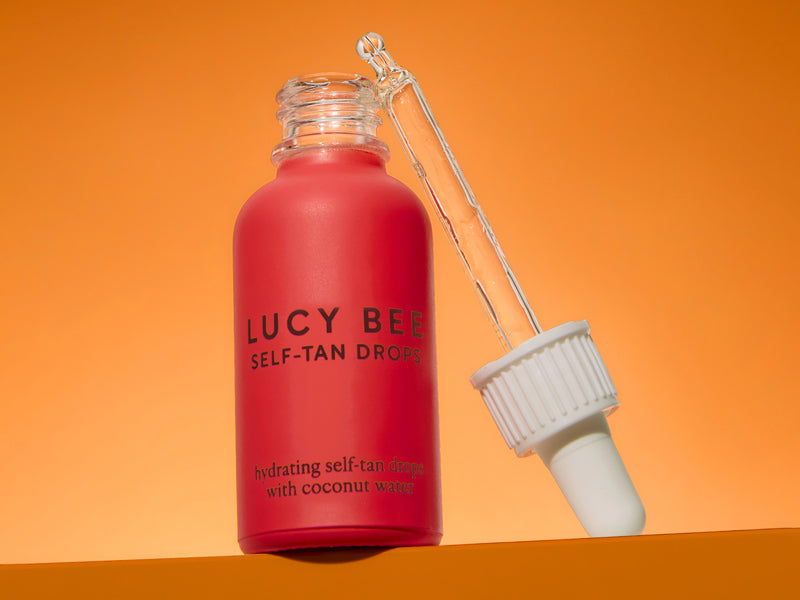
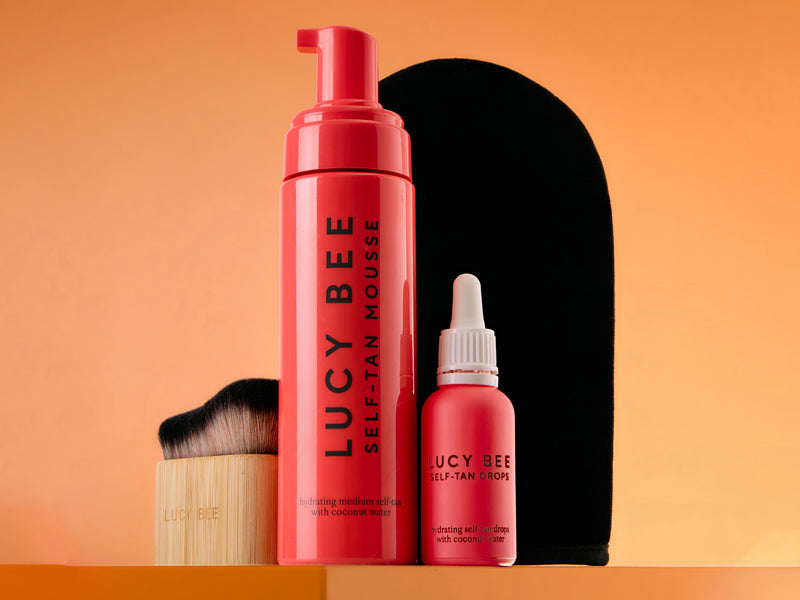
The fix is twofold: choose a formula with a green base, which cancels out orange tones the way colour theory would suggest, and build your colour up gradually rather than applying a full, dark layer in one go. Our Self-Tan Mousse is formulated with a green base specifically so pale skin tones develop a natural, believable colour rather than an orange one. Our Self-Tan Drops are colourless and mix into your moisturiser or serum, so you decide exactly how much colour to add.
Building a Pale Skin Self-Tan Routine
A gradual, controlled approach gives the most natural-looking result on pale skin. Here is how to build one, and why each step matters:
- Exfoliate - Exfoliating Body Mitt. Removes dry, flaky skin so tan develops evenly, rather than clinging to rough patches on elbows, knees and ankles, which show up more obviously on fair skin.
- Build colour gradually - Self-Tan Drops. Start with two or three drops mixed into your moisturiser or serum, then add more over a few applications until you reach the depth of colour you want.
- Or apply an even, full-body glow - Self-Tan Mousse. The green-tinted formula is designed to avoid orange tones on pale skin, and rinses off after 2 hours for a lighter, more subtle result, or is left on for 6-8 hours for a deeper colour.
- Blend tricky areas - Kabuki Blending Brush. Buffs out product on hands, feet and ankles so these areas do not end up noticeably darker than the rest of your skin.
- Moisturise daily - Hand & Body Cream. Keeps skin hydrated so your tan fades evenly instead of in patches.
For a full step-by-step walkthrough of prepping, applying and maintaining a tan, see our Self-Tan: The Complete Guide, and for the most common streaking and patchiness mistakes to avoid, read self-tanning mistakes to avoid.
Frequently Asked Questions
Will fake tan make pale skin look orange?+
Not if you choose a formula designed for it. Our Self-Tan Mousse has a green base specifically to neutralise orange undertones on pale skin, and Self-Tan Drops let you build colour gradually so you never apply more than you need.
Should I use drops or mousse if I have pale skin?+
Both work well. Drops give you the most control, ideal if you want a subtle, buildable glow or are nervous about going too dark. Mousse gives an even, full-body colour in one application, and its green base is specifically formulated to suit pale skin tones.
How do I stop my tan looking patchy on pale skin?+
Patchiness usually comes down to prep rather than the product. Exfoliate thoroughly beforehand, apply a light layer of moisturiser to dry areas like elbows and knees rather than a heavy one, and use a fresh mitt to blend the tan evenly.
Can I get a very subtle, barely-there glow?+
Yes. Mix just one or two Self-Tan Drops into your usual moisturiser for a barely-there radiance, then build up with more drops over successive applications once you know how your skin takes the colour.
Do I still need SPF once I have a fake tan?+
Yes. Self-tan gives colour but no UV protection, so pale skin still needs a broad-spectrum SPF underneath, just as it would without a tan.
Prefer not to keep reordering? Our organic skincare subscription delivers your favourite tanning products automatically and saves you up to 15%.
Want more self-tan tips?
New to our emails? Please check your inbox and confirm your subscription. Once confirmed, you’ll receive a code for 15% off your first order. Already subscribed? We’ll simply update your interests. First-order offer for new email subscribers only. Terms apply. Read our Privacy Policy.

The people behind Lucy Bee
Skincare with a personal story
Lucy
Founder & CIBTAC beauty therapist
Lucy’s experience working in spas and salons shaped her interest in ingredients and the products we put onto our skin. Her own sensitive skin helped inspire the Lucy Bee skincare range, launched in 2020.
Our approach is to make caring for your skin feel straightforward, with thoughtful formulations and practical advice for everyday routines.
Read our family story